
Many growth questions come down to a repeated behavior. The Habits Framework asks what cues a routine, what the person does, and what reward reinforces it. It can shape the discussion guide from the start or enter during analysis when the fieldwork reveals a pattern that needs explanation.
A Pest-Control Study
The Habits Framework, grounded in behavioral science, can be applied to many marketing problems. It builds on work associated with Ivan Pavlov and B.F. Skinner and was more recently popularized by Charles Duhigg’s book The Power of Habit: Why We Do What We Do in Life and Business. The framework helps researchers examine how a repeated behavior begins and what keeps it going.
The Habit framework has three elements:
- The cue is a trigger that tells the brain to go into automatic mode and begin the behavior
- Next comes the behavior, the action resulting from a cue (can be non-conscious)
- Finally, the reward, which can be physical, mental, or social, reinforces the routine, drives repetition, and the formation of the habit
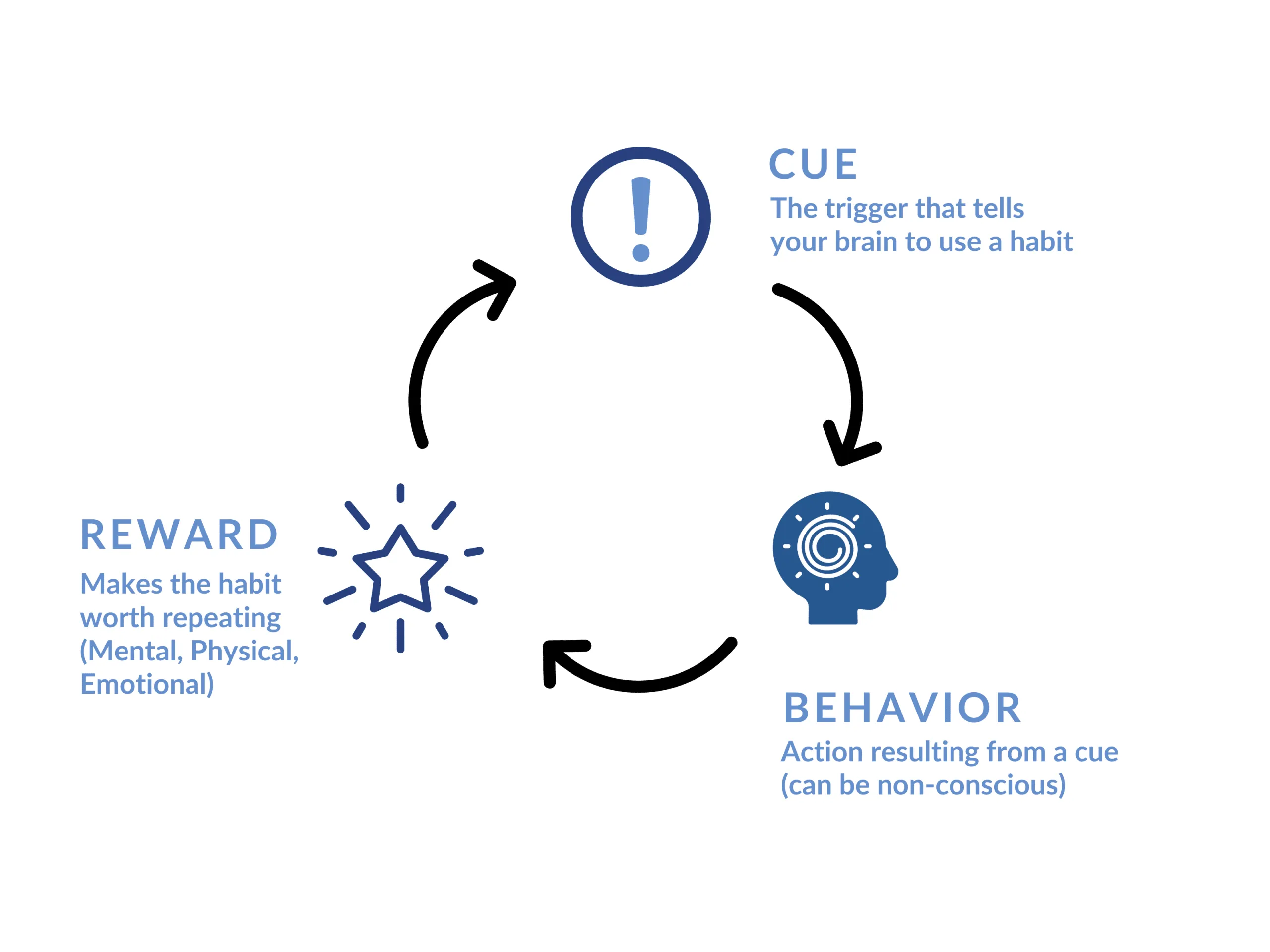
We used the Habits Framework in a study for a pest-control company whose customers were not applying a monthly preventive treatment consistently throughout the year.
The qualitative research found two reasons for irregular use: one related to the cue and one to the reward. Some customers simply missed the 30-day interval and forgot to buy or apply the product. Recommendations for this group focused on making the reminder more visible or attaching treatment to an existing routine.
The second reason for lapsing treatment was consumers’ lack of motivation to administer the product during winter, when they felt the risk was minimal and the reward—a feeling of protection from infestation—was less immediate. Our recommendations focused on strengthening the reward or adding another one, such as cost savings or a more engaging purchase and usage experience.